

Joint pain can be a major obstacle in living a full, active life. Whether it’s from aging, injury, or conditions like osteoarthritis, the lack of proper joint lubrication can lead to inflammation, stiffness, and discomfort.
That’s where lubricating injections, such as viscosupplementation, can provide relief performed at Burghealth Physical Medicine. If you’re in the Tampa Bay Area or St. Petersburg, these treatments can help restore joint health and improve mobility.
In this blog post, we’ll explore how these injections work, what they contain, and how they can help improve your joint health.
What are Joint Lubrication Injections?
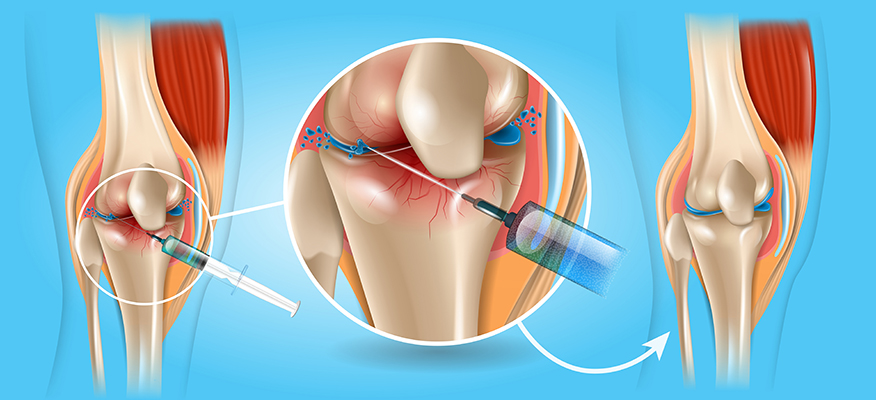
Joint lubrication injections are non-surgical treatments designed to help restore the natural cushioning in your joints with precision. In people with joint issues like osteoarthritis, the body’s production of hyaluronic acid decreases, which can cause pain and stiffness.
Joint lubrication injections aim to replenish this vital substance in the intra- articular joint space. They can be used to relieve pain, improve mobility, and may even slow the progression of certain joint conditions.
These injections provide lubrication to the joint space, which helps reduce friction between the bones and prevents further wear and tear. Ultrasound-guided injections at Burghealth Physical Medicine ensure accuracy, allowing for precise delivery of the treatment. They are typically injected into weight-bearing joints such as a hip, knee, or ankle.
Hyaluronic Acid (HA)
Current options include native and cross-linked, low-molecular or high-molecular-weight options. The hyaluronic acid can classify as animal-derived or non-animal derived. Animal-derived fillers come from a rooster comb, and non-animal derived hyaluronic acid production occurs through biofermentation of Streptococcus.
Many viscosupplementation HA products exist. The following is a partial list of options available (1):
- Hylan g-f20 (Synvisc and Synvisc-One)
- Sodium hyaluronate (Suparts Fx, Euflexxa, Gelsyn, Durolane, and Hyalgan)
- Hyaluronan (HA) (Orthovisc, Monovisc, Hymovis)
Wharton’s Jelly Injections
What It Is:
Wharton’s Jelly is a gelatinous substance found in the umbilical cord. Wharton’s jelly is a connective tissue composed of extracellular matrix abundant in glycosaminoglycans (mostly hyaluronic acid), collagen fibers and myofibroblasts, and occasional mast cells (2).
How It Works:
The umbilical cord tissue contains high molecular weight hyaluronic acid (HMW), which is associated with high fluid retention in joints and has strong anti-inflammatory properties (3).
Wharton’s Jelly injections are a form of regenerative medicine. Wharton’s jelly has also a clinically relevant quantity of growth factors, cytokines, and extracellular vesicles (3). The large amount of these substances may play a role in reducing inflammation, pain, and augment healing of musculoskeletal injuries.
These factors represent potential expanded applications for regenerative medicine (3).
What It Contains:
Wharton’s Jelly is made up of:
- Hyaluronic Acid
- Collagen
- Growth factors (such as cytokines)
- Proteoglycans and glycosaminoglycans (GAGs)
Recent studies have examined the potential of these cytokines to trigger regeneration. These studies suggest that the inflammatory signals they initiate play a pro-regenerative role, and that a well-timed sequence of inflammatory followed by anti-inflammatory signals is crucial for effective healing (3).
Conclusion
While not every injection will work for every patient, and depending on the severity of your pain, more intensive treatments may be necessary, most individuals who undergo injection therapy report positive outcomes.
In addition to alleviating symptoms, you can also expect benefits such as:
- Faster relief
- Shorter procedure
- No scarring
- Less painful
- Minimal side effects
- Little to no downtime
Unfortunately, injection therapies may not be a permanent solution, and you may need to return for additional treatments every few weeks or months. Your provider might also suggest combining these injections with other procedures (such as platelet-rich plasma) or therapies to help manage your pain for a longer period.
All injections are not created equal, and some may have better outcomes than others. The delivery of the injection also plays a huge role: ultrasound-guided vs. landmark-guided. Ultrasound-guided injections are often used for precision in administering joint lubrication, enhancing the effectiveness of the treatment.
According to a meta-analysis, research demonstrated a significant improvement in patient-reported outcome measures such as pain, function, and patient satisfaction with ultrasound-guided IA (intra-articular) injections compared with landmark-guided IA injections, making them a more reliable option for many patients (4).
Ready to take the next step toward better joint health? Contact Burghealth Physical Medicine today to learn more about your options in the Tampa Bay area, including St. Petersburg!
Peck J, Slovek A, Miro P, Vij N, Traube B, Lee C, Berger AA, Kassem H, Kaye AD, Sherman WF, Abd-Elsayed A. A Comprehensive Review of Viscosupplementation in Osteoarthritis of the Knee. Orthop Rev (Pavia). 2021 Jul 10;13(2):25549. doi: 10.52965/001c.25549. PMID: 34745480; PMCID: PMC8567800.
Stefańska K, Ożegowska K, Hutchings G, Popis M, Moncrieff L, Dompe C, Janowicz K, Pieńkowski W, Gutaj P, Shibli JA, Prado WM, Piotrowska-Kempisty H, Mozdziak P, Bruska M, Zabel M, Kempisty B, Nowicki M. Human Wharton’s Jelly-Cellular Specificity, Stemness Potency, Animal Models, and Current Application in Human Clinical Trials. J Clin Med. 2020 Apr 12;9(4):1102. doi: 10.3390/jcm9041102. PMID: 32290584; PMCID: PMC7230974.
Gupta, A., El-Amin, S.F., Levy, H.J. et al. Umbilical cord-derived Wharton’s jelly for regenerative medicine applications. J Orthop Surg Res 15, 49 (2020). https://doi.org/10.1186/s13018-020-1553-7
Win Min Oo, James Linklater, Abu Siddiq, Kai Fu, David Hunter. Comparison of ultrasound guidance with landmark-guidance for symptomatic benefits in knee, hip and hand OA: Systematic review and meta-analysis of randomized controlled trials. Australasian Journal of Ultrasound in Medicine . 2024 April 19. https://doi.org/10.1002/ajum.12386