

Chronic lower back pain does not usually begin with a single dramatic event. For many people, it develops gradually — stiffness in the morning, discomfort after sitting, or pain that flares up during normal activities. Over time, that irritation can become persistent and limiting.
At Burghealth Physical Medicine, we work with patients who are tired of temporary fixes and want to understand what is actually causing their back pain.
One of the most effective non-surgical solutions we offer is spinal decompression therapy — a targeted approach designed to relieve pressure on damaged spinal discs and irritated nerves.
Why Chronic Lower Back Pain Persists
The lumbar spine absorbs constant stress. Sitting, lifting, twisting, and even walking place pressure on the discs between each vertebra.
When those discs begin to bulge, herniate, or degenerate, they can compress nearby nerves and trigger lower back pain and inflammation.
Once a disc loses healthy hydration and spacing, it cannot absorb shock properly. The surrounding muscles tighten to compensate, and nerve irritation continues.
Without addressing the underlying compression, pain often becomes cyclical.
What Is Spinal Decompression?
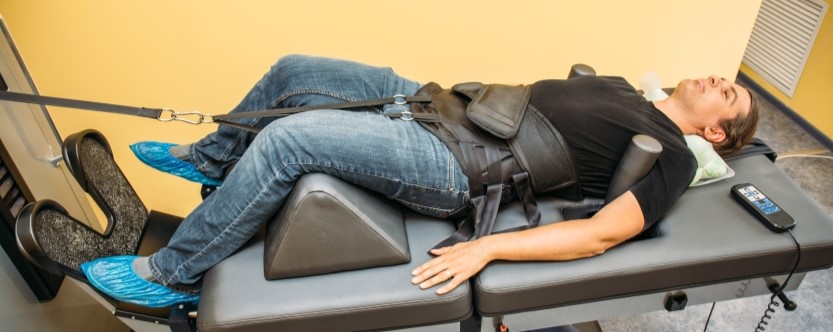
Spinal decompression is a controlled, motorized traction therapy that gently stretches the spine. The goal is to create negative pressure within the affected discs.
This subtle separation allows bulging or herniated disc material to retract slightly, reducing nerve compression.
Unlike general stretching or inversion tables, clinical spinal decompression is precisely calibrated. The table adjusts angles and force to target specific disc levels in the lumbar spine.
How Decompression Supports Disc Healing
Discs do not have a direct blood supply. They rely on movement and pressure changes to receive nutrients. When compression is constant, nutrient exchange decreases.
Over time, discs can dry out and weaken.
Spinal decompression creates a pumping effect within the disc. By relieving pressure, it promotes improved circulation of oxygen, water, and nutrients.
This environment supports natural healing processes and helps reduce inflammation around irritated nerves.
Conditions That Often Respond Well
Spinal decompression is commonly recommended for patients dealing with:
- Disc injuries (Herniated or bulging discs)
- Degenerative disc disease
- Sciatica
- Chronic lumbar strain
- Facet joint irritation
Many of our patients in St Pete seek decompression therapy after trying medication, injections, or rest without lasting relief. When imaging shows disc involvement, decompression can be an important part of a comprehensive plan.
What a Treatment Plan Looks Like
Before beginning care, we perform a thorough evaluation to determine whether disc compression is contributing to your symptoms. Not every case of back pain requires decompression, which is why proper diagnosis is critical.
During treatment, you remain comfortably positioned on the decompression table. Sessions typically last 20–30 minutes. Most patients describe the sensation as a gentle stretching rather than forceful pulling.
A series of sessions is usually recommended to gradually reduce disc pressure and allow tissue recovery over time.
Why Early Intervention Matters
Chronic lower back pain tends to worsen when left untreated. Ongoing compression increases inflammation and may accelerate degeneration.
Addressing disc pressure early can help prevent more severe complications.
Patients throughout St Pete often tell us they waited too long before seeking care. The earlier decompression begins, the more responsive discs may be to treatment.
Combining Decompression with Comprehensive Care
At Burghealth Physical Medicine, spinal decompression is rarely used in isolation. We often combine it with corrective exercises, targeted soft tissue therapy, and functional rehabilitation strategies.
This integrated approach helps stabilize the spine after pressure is reduced. Strengthening supporting muscles improves long-term outcomes and reduces the likelihood of recurring flare-ups.
A Non-Surgical Alternative Worth Considering
Many patients explore decompression therapy because they want to avoid surgery whenever possible. While surgery may be necessary in severe cases, non-invasive options should often be considered first.
Spinal decompression offers a conservative, evidence-informed method for addressing one of the most common drivers of chronic lower back pain — disc compression.
If you are living with persistent lower back pain and suspect a disc issue may be involved, it may be time for a professional evaluation.
Schedule an appointment with us today to learn whether spinal decompression is right for you and take the first step toward lasting relief.